
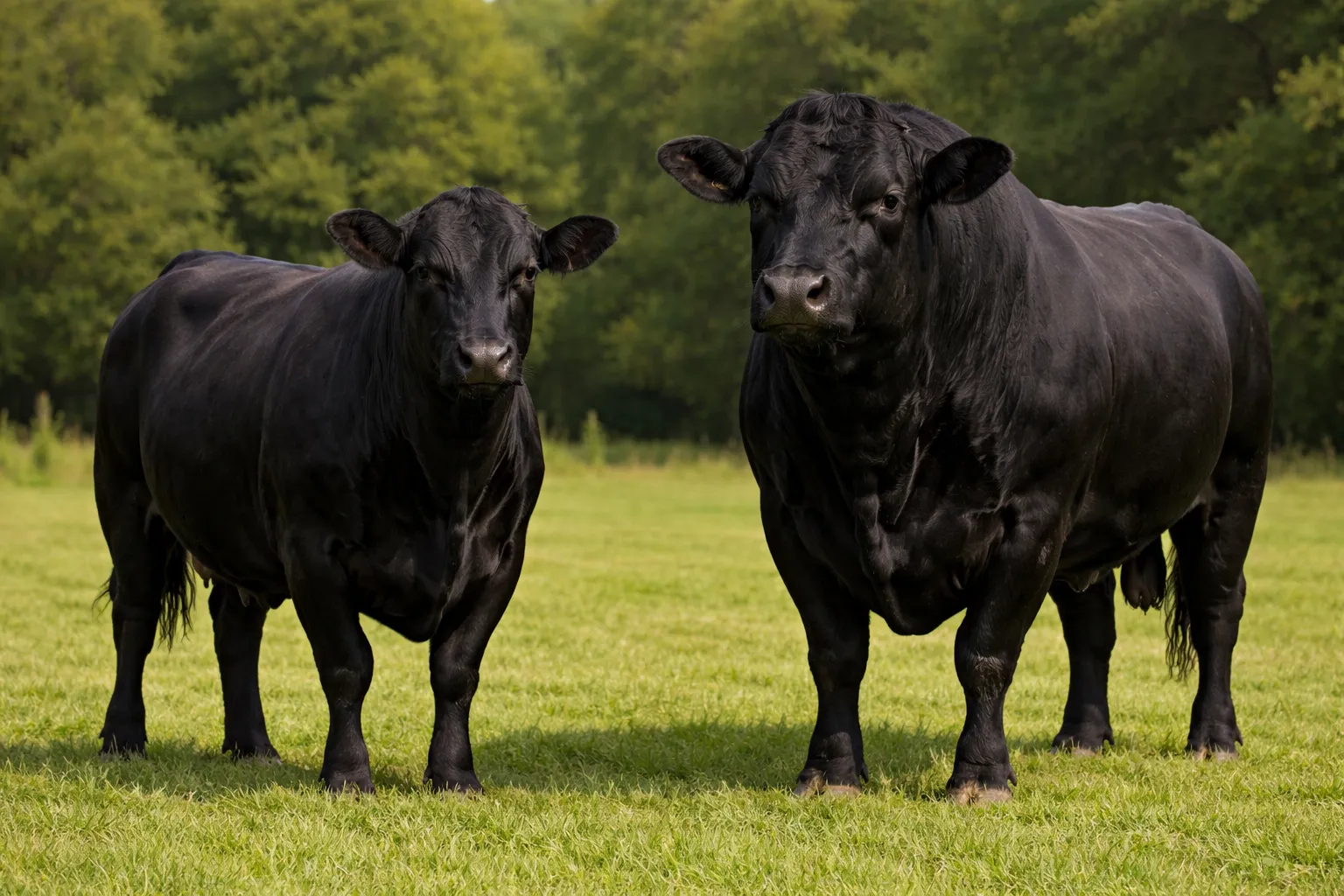
Angus (Black and Red)
Angus cattle are one of the most popular and widely used beef breeds in North America,
particularly in the Alberta Special Areas, where their adaptability and performance make them a natural fit for the region’s challenging climate and pasture conditions. Originating from Scotland, Angus cattle have developed traits over centuries that enable them to thrive in cold, variable climates. Their genetic strengths, combined with their desirable carcass characteristics and ease of management, make them an ideal choice for both commercial and smaller-scale ranching operations in the Special Areas.
Advantages:
Angus cattle excel in cold environments, making them particularly well-suited to the Alberta Special Areas, where winter temperatures can drop below -30°C. Their thick, double-layered winter coat provides insulation against the cold, allowing them to maintain body condition even in harsh weather. Angus cattle are also efficient grazers, able to convert native grassland forage into weight gain with minimal supplementation. This efficiency is a critical advantage in a region where forage quality fluctuates depending on rainfall and seasonal conditions. Additionally, Angus cattle are polled, meaning they naturally do not grow horns. This reduces the risk of injuries in the herd and eliminates the need for dehorning, which can be stressful for calves and labor-intensive for ranchers. Perhaps the most celebrated advantage of Angus cattle is their exceptional carcass quality. Angus beef is highly prized for its marbling, tenderness, and rich flavor, often commanding premium prices in both domestic and international markets. Their carcasses consistently yield high-quality cuts that meet or exceed the standards required for premium beef programs such as Certified Angus Beef (CAB), providing a reliable return on investment for ranchers.
Potential Challenges:
While Angus cattle offer many benefits, they are not without potential challenges, especially in certain environmental conditions. One of the primary concerns is their susceptibility to pinkeye. Pinkeye, a bacterial infection that affects the eyes, can become a significant issue during warm, fly-infested months, leading to discomfort, reduced grazing, and in severe cases, blindness. Managing fly populations and maintaining good pasture conditions can help mitigate this risk, but it remains a concern in certain seasons. Foot rot is another potential challenge, particularly in wet and muddy conditions, which can occasionally occur in low-lying or poorly drained areas. Prolonged exposure to moisture softens the hoof tissue, allowing bacteria to infect the foot and cause lameness. In dryland areas like the Special Areas, foot rot is less common, but it can become an issue during periods of unusually wet weather or in poorly drained paddocks. Regular hoof trimming, maintaining clean environments around water sources, and rotating pastures to minimize mud exposure can help reduce the risk.
Calving and Breeding:
Angus cattle are known for their high fertility rates and excellent reproductive performance, which is a major advantage for ranchers seeking a consistent calving season and a high weaning percentage. Angus cows typically cycle early and breed back quickly after calving, contributing to improved herd productivity. Their calving ease is another critical benefit, particularly for ranchers managing large herds in extensive grazing systems where assistance during calving may be limited. Angus calves are known for their low birth weights, which reduce the risk of dystocia (difficult births), making Angus an ideal choice for breeding to first-calf heifers. Despite their smaller birth weights, Angus calves exhibit strong vigor at birth, ensuring high survival rates. Angus cows are also excellent mothers, displaying strong maternal instincts and ample milk production to support calf growth. Their attentiveness and protective nature ensure that calves receive adequate nourishment and protection from predators, which is essential in extensive grazing environments.
Disposition:
Angus cattle are generally known for their docile and calm temperament, making them easier to handle and manage compared to some other breeds. This trait is particularly important for ranchers working in extensive systems, where minimizing stress on cattle contributes to better weight gain, reproductive success, and overall herd health. However, while most Angus cattle are calm and easy to manage, cows with newborn calves can be protective and occasionally exhibit aggressive behavior if they perceive a threat to their offspring. This protectiveness is generally a desirable trait, as it ensures the safety of calves, but it requires ranchers to exercise caution when working with cow-calf pairs, particularly during calving season. Ensuring that cattle are handled gently and with consistent management practices helps to maintain their docile nature and minimizes stress during handling and sorting.
In summary, Angus cattle offer a combination of advantages that make them an excellent choice for ranchers in the Alberta Special Areas. Their cold tolerance, efficient grazing abilities, superior carcass quality, and ease of calving make them well-suited for extensive operations in semi-arid environments. While challenges such as pinkeye and foot rot require management, their overall resilience and adaptability make them one of the most reliable and profitable breeds for cattle ranching in the region.