
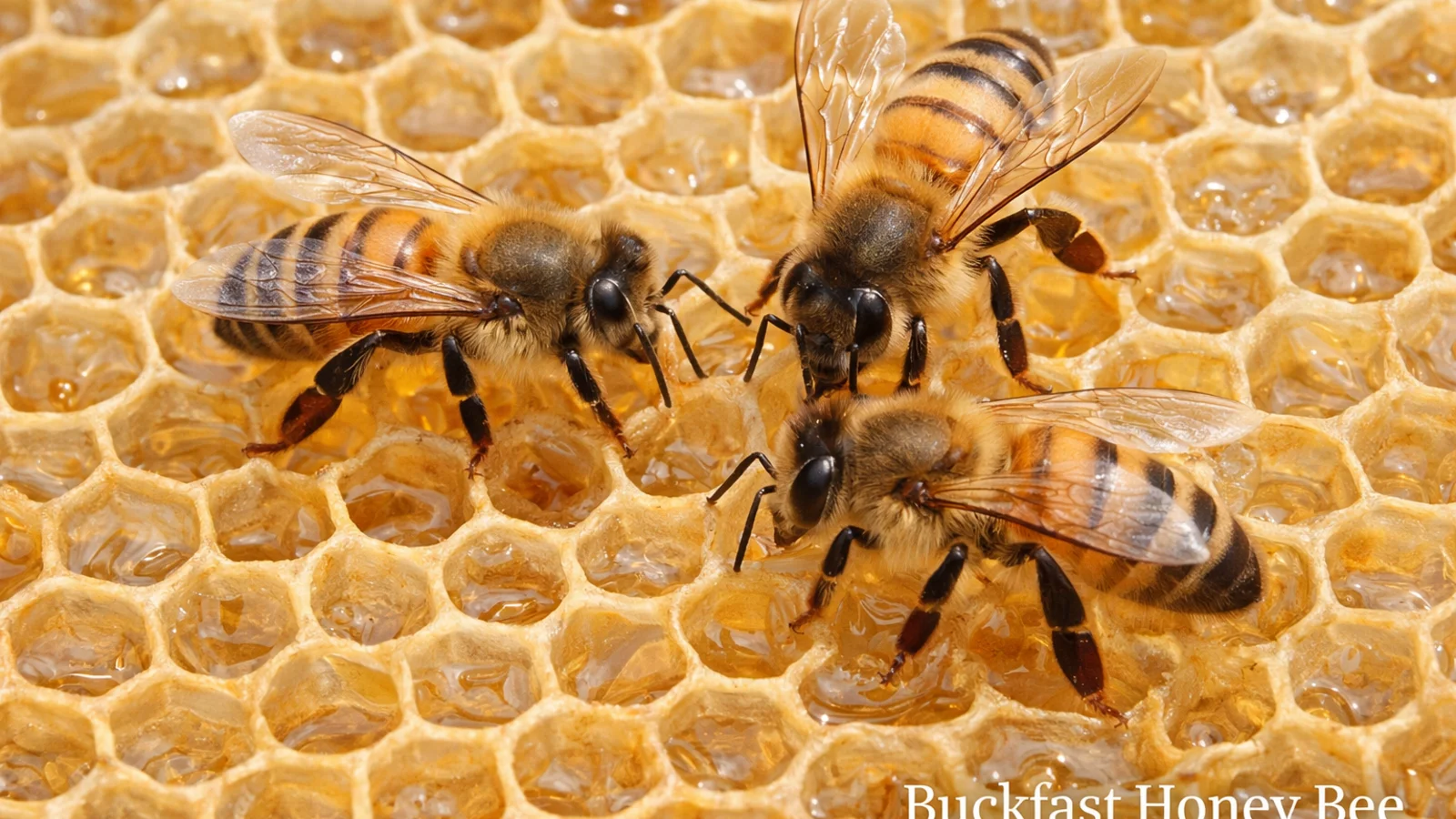
Buckfast Honeybee (Hybrid of Apis mellifera subspecies)
Positives:
- Strong disease resistance and excellent mite tolerance.
- Consistent honey production with low swarming tendencies.
- Adaptable to various climates, making them versatile for mixed farming operations.
Negatives:
- Less predictable genetic traits due to hybridization.
- May be slightly more aggressive than Italian and Carniolan bees.
Suitability: A good all-around choice for farms seeking resilient colonies with balanced pollination and honey production capabilities.

Carniolan Honeybee (Apis mellifera carnica)
Positives:
- Excellent overwintering ability, making them ideal for colder climates.
- Strong foragers and pollinators, with rapid spring build-up to maximize pollination during peak bloom.
- Gentle and less prone to robbing compared to Italian bees.
Negatives:
- May swarm more frequently if not properly managed.
- Slower to build up in the early spring, which can delay pollination in some crops.
Suitability: Ideal for colder regions or farms emphasizing pollination services, with the added benefit of moderate honey production.
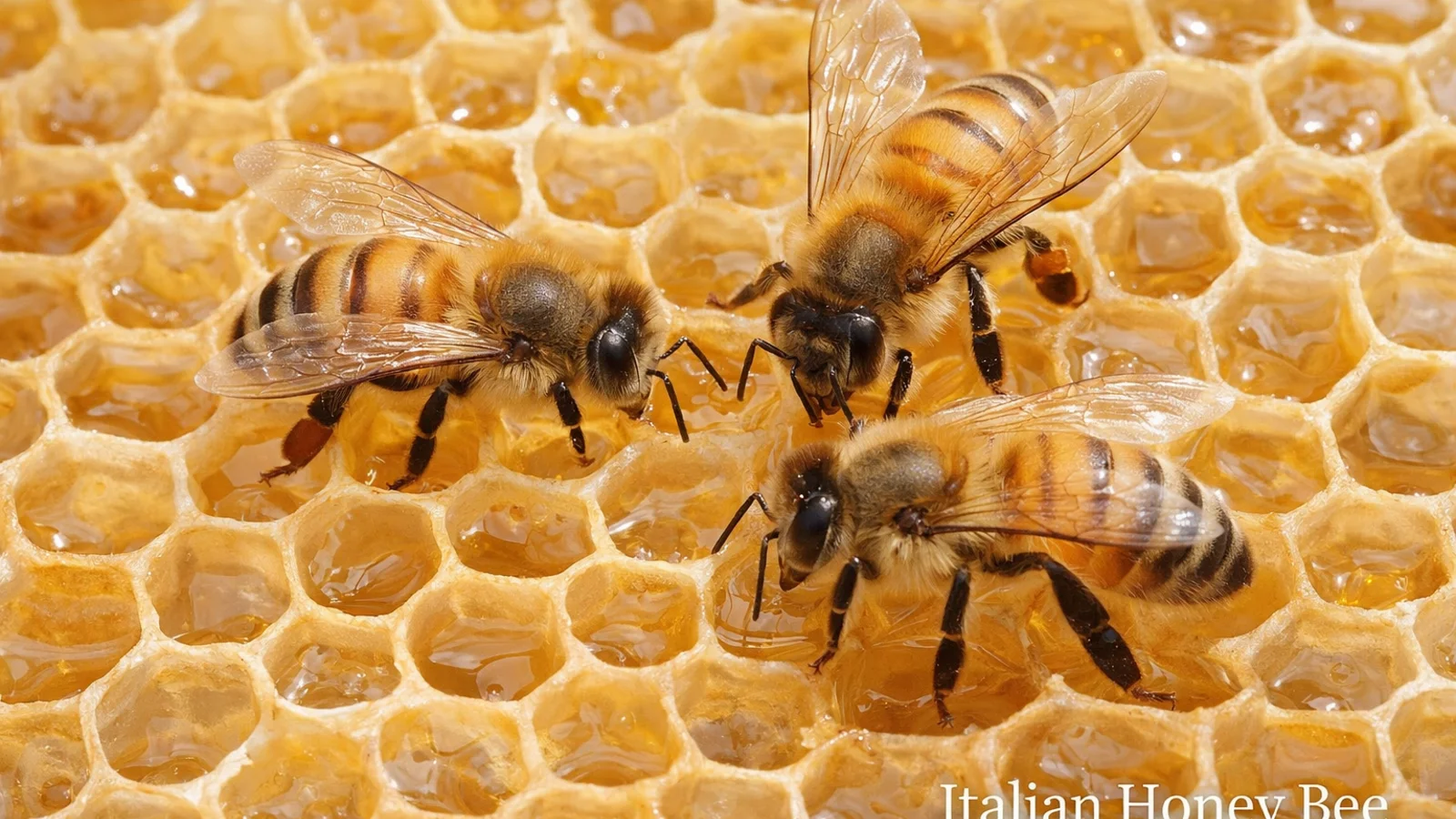
Italian Honeybee (Apis mellifera ligustica)
Positives:
- Excellent honey producers with a strong work ethic, making them ideal for maximizing honey yields.
- Gentle temperament, making them easier for beginners to manage.
- Good resistance to European foulbrood and other common diseases.
Negatives:
- Prone to drifting and robbing from weaker colonies.
- Less effective at overwintering in extremely cold climates.
- Can build large populations that may require regular management to prevent swarming.
Suitability: Perfect for farms seeking high honey production and easy-to-manage colonies, especially in temperate climates.
Incorporating beekeeping into a mixed farming operation can significantly enhance crop yields through pollination while providing an additional income stream from honey, beeswax, and other hive products. Honeybees are particularly well-suited for farms growing fruit, vegetables, oilseeds, and forage crops, making them a valuable addition to farms looking to diversify revenue and improve overall agricultural output.
Hive and Shelter Requirements
Hive Types
- Langstroth Hives: The most common type, with stackable boxes that allow for easy honey extraction and hive management.
- Top-Bar Hives: Lower maintenance and well-suited for natural beekeeping but less productive for large-scale honey production.
- Warre Hives: Smaller, vertical hives that mimic natural environments, ideal for organic or minimal-intervention operations.

Russian Honeybee (Apis mellifera)
Positives:
- High resistance to varroa mites and other parasites.
- Strong overwintering ability and adaptability to diverse climates.
- Excellent for maintaining healthy hives in challenging environments.
Negatives:
- More defensive and less predictable than other breeds.
- Slower to build up in the spring, which can delay pollination services.
Suitability: Best suited for farms requiring disease-resistant colonies in areas with high parasite pressure.