In the dryland regions, water is always important—but in winter, it becomes critical. When temperatures drop well below freezing, water systems are pushed to their limits. Failures are not just inconvenient; they can quickly become serious problems for livestock. This might seem like an unlikely time to have an article about how to keep everybody watered in the winter but pretty tough digging in the winter.
The first principle is reliability. Any system that works “most of the time” is not good enough in winter. Cattle need consistent access to water, and interruptions can lead to reduced intake, weight loss, and health issues. Heated waterers are the most common solution, but they must be properly maintained. Heating elements, thermostats, and electrical connections should be checked before winter sets in. Waiting until January to discover a failure is asking for trouble. Insulation plays a larger role than many realize. Properly insulated water lines and tanks reduce the load on heating systems and prevent freezing in extreme conditions. Frost-free hydrants must also be checked to ensure they are draining correctly. 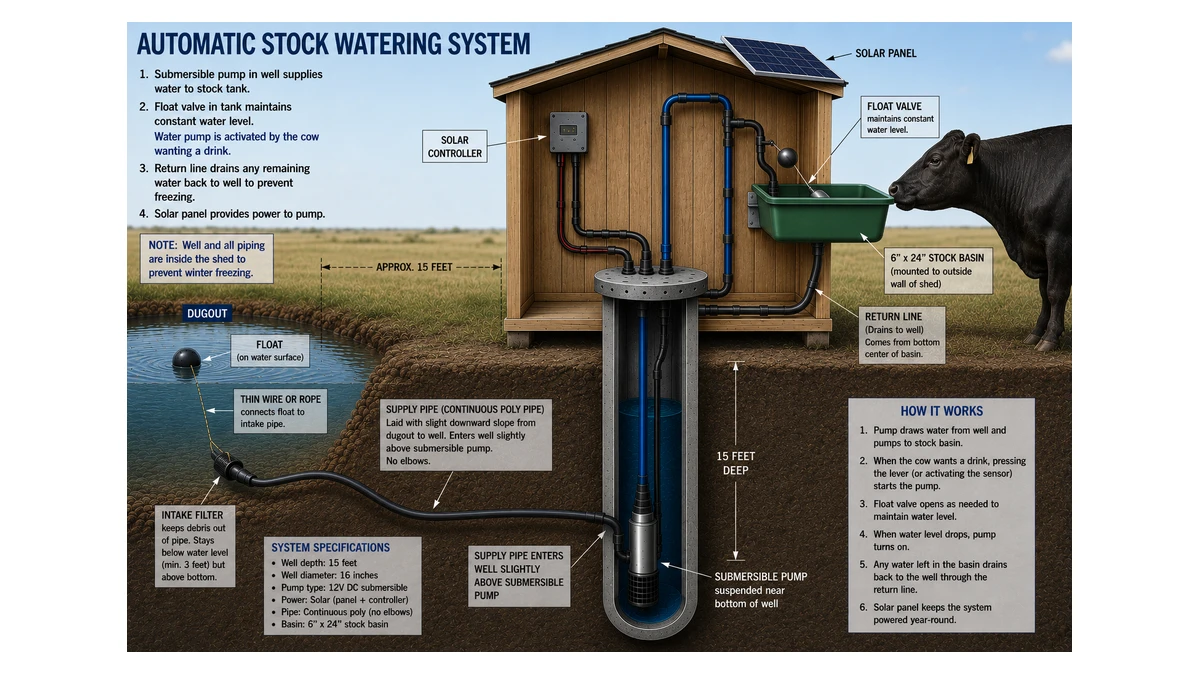
Dugouts and natural water sources present additional challenges. Ice formation can limit access, and snow buildup can make it difficult for cattle to reach water. Regular maintenance—breaking ice and clearing access—is necessary but labor-intensive. Wind is often the deciding factor. Even moderate temperatures combined with strong wind can freeze exposed water quickly. Sheltering water systems with windbreaks can significantly improve performance.
Flow rate is another consideration. Water that is moving is less likely to freeze. Systems designed with continuous or regular flow are more reliable than those that rely on stagnant water.
Backup plans are essential. When a system fails—and eventually one will—there must be an alternative. Hauling water is not ideal, but having the equipment ready can prevent a short-term issue from becoming a major problem.
Power supply is also a point of concern. Electrical outages in winter are not uncommon. Generators or alternative power sources can provide insurance against unexpected interruptions.
It is also worth noting that cattle will reduce water intake if access is difficult or if water is too cold. Slightly warmed water encourages better consumption, which supports overall health and feed efficiency.
In the end, winter water systems are about consistency. The goal is not to fix problems when they occur, but to prevent them altogether. In a region where conditions are harsh and unforgiving, preparation is the only reliable approach.